




Solution



Send Us A Message
In 2026, avoiding common additive mistakes is critical for anyone working with Dyestuffs and Pigments, Additives, Pharmaceutical Raw Materials, Daily Chemicals, and Flavors and Fragrances. From formulation errors to sourcing risks and compliance gaps, these issues can affect product quality, safety, and cost. This guide highlights the most frequent pitfalls to help researchers, operators, buyers, and business leaders make smarter, more reliable decisions.
Why do additive mistakes still happen in chemical operations?
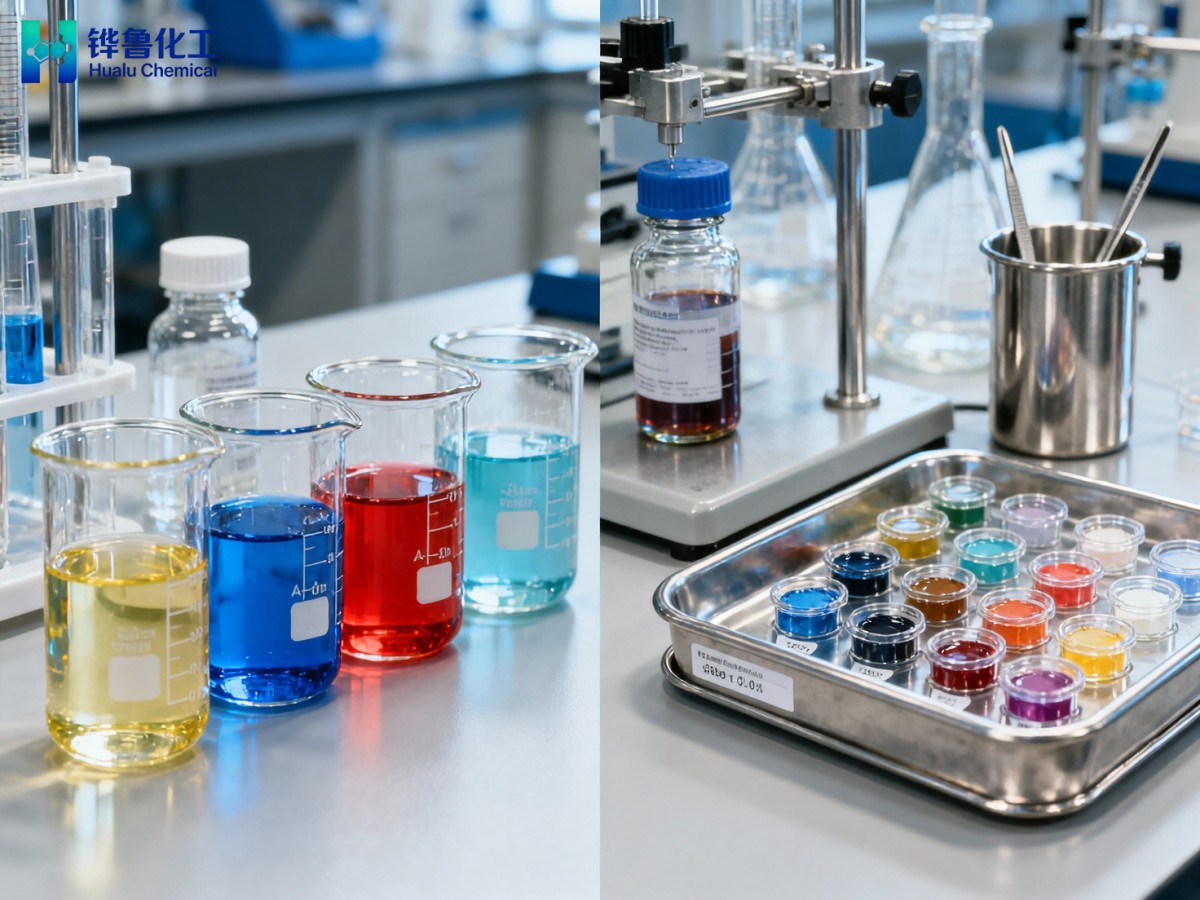
In the chemical industry, additive mistakes rarely come from one single error. They usually result from a chain of weak decisions: incomplete technical review, mismatched dosage, poor compatibility checks, unstable supply sources, or weak change control during scale-up. In 2026, these risks are more visible because formulations are becoming more complex, compliance pressure is higher, and procurement teams are expected to manage cost and continuity at the same time.
For information researchers, the first problem is often data quality. Technical sheets may describe purity, appearance, and recommended use, but they do not always explain process sensitivity, storage limits, or interaction with solvents, surfactants, binders, or active ingredients. For operators, even a small deviation such as an addition sequence change of 1 step or a temperature shift of 5°C–10°C can influence dispersion, viscosity, color shade, or stability.
Buyers and business decision-makers face another issue: commercial pressure can lead to technical shortcuts. A lower quoted price may hide wider batch-to-batch variation, longer lead times of 2–6 weeks, limited traceability, or inconsistent packaging protection. When additives are used in dyestuffs, pigments, pharmaceutical raw materials, daily chemicals, or flavors and fragrances, these gaps can trigger quality complaints, rework, production delays, and avoidable waste.
The most effective prevention method is to treat additive selection as a cross-functional task. R&D, quality, procurement, production, and management should align on 4 core questions: what the additive must do, what it must not affect, what operating window is acceptable, and what supply risk can be tolerated. Without this structure, the same common additive mistakes tend to repeat across projects.
- Technical misunderstanding: selecting by name only instead of functional performance in the real formulation system.
- Process inconsistency: changing addition order, mixing speed, or holding time without validation.
- Commercial blind spots: focusing on unit price while ignoring lead time, packaging integrity, and lot consistency.
- Compliance gaps: missing checks on intended application, documentation, and restricted substance expectations.
Which additive mistakes cause the biggest quality and cost losses?
Some additive mistakes look small on paper but become expensive in production. A wrong dispersant level in a pigment system may reduce color strength and increase milling time. A poorly matched preservative in daily chemicals may pass the first inspection but fail over 30–90 days of storage. An unsuitable carrier or stabilizer in flavors and fragrances may change release behavior, odor profile, or shelf stability. In each case, the technical failure becomes a cost problem.
The table below summarizes common additive mistakes in chemical manufacturing and how different teams should evaluate them before approval. These examples are broad enough for multi-segment chemical use, yet specific enough to support formulation review, procurement decisions, and process control.
The pattern is clear: quality loss and cost loss are usually connected. A cheaper additive that causes 1 failed batch, 2 extra cleaning cycles, or 7–10 days of revalidation is not a lower-cost choice. This is why common additive mistakes should be evaluated through total operating impact rather than invoice value alone.
High-risk errors that are often underestimated
One underestimated mistake is relying on a single technical parameter. For example, purity alone does not predict performance if moisture, particle size, solvent residue, or pH sensitivity changes how the additive behaves in the final formula. In dyestuffs and pigments, dispersion stability may depend more on particle interaction than on headline purity. In daily chemicals, sensory effect and stability can be more critical than a narrow assay difference.
Another frequent issue is incomplete storage control. Some additives are stable at 15°C–25°C in sealed packaging, but performance may drift after repeated opening, moisture pickup, or extended warehouse holding. If inventory rotates slowly over 3–6 months, buyers need shelf-life review and packaging suitability, not just initial test approval.
A third mistake is weak communication between purchasing and production. Procurement may approve an alternative source based on paperwork equivalence, while operators later find slower wetting, more foam, stronger odor, or different dosing behavior. If this change is not documented through a 3-stage review—lab check, pilot trial, and production confirmation—routine performance becomes unpredictable.
A simple internal review checklist
- Confirm the additive function in one sentence: dispersion, stabilization, preservation, flow control, masking, or another defined role.
- Set 3–5 release criteria before testing, such as viscosity range, color difference tolerance, pH window, or odor acceptance.
- Run at least 2 comparison lots if a new supplier or substitute is introduced.
- Record operating conditions including temperature, mixing speed, addition order, and hold time.
How should buyers and technical teams evaluate additive selection in 2026?
A strong additive selection process does not start with price; it starts with use conditions. Chemical buyers and technical teams should first define whether the application is sensitive to pH, heat, oxidation, microbial growth, shear, color drift, odor carryover, or regulatory review. This reduces the risk of choosing an additive that looks acceptable on a data sheet but fails under actual plant conditions.
In practice, additive selection should combine at least 5 dimensions: technical fit, consistency, compliance support, lead time, and total cost. For a pharmaceutical raw material support additive, impurity profile and documentation may dominate. For daily chemicals, odor, skin-contact positioning, and preservation performance may matter more. For pigments or coatings-related chemistry, wetting, anti-settling, and shade stability can be decisive.
The table below is useful for procurement and cross-functional review meetings. It converts broad chemical purchasing concerns into a structured additive selection guide that can be used during supplier comparison, internal approval, and pre-order discussion.
A structured selection process helps avoid reactive buying. It also supports faster internal approval because every stakeholder can see the same decision criteria. For enterprise decision-makers, this reduces hidden risk. For buyers, it improves supplier comparison. For operators, it increases process repeatability from batch to batch.
What should be tested before approving a new additive?
At minimum, testing should cover 3 stages: laboratory screening, pilot validation, and initial production monitoring. Laboratory screening checks baseline compatibility and dosage response. Pilot validation confirms mixing and process behavior under more realistic conditions. Initial production monitoring verifies whether the additive still performs after scale-up, storage transfer, and routine operator handling.
For many chemical formulations, a practical pilot window includes 2–3 dosage points, 1 control sample, and at least 24–72 hours of short-term stability observation. If the additive is used in flavor, fragrance, or daily chemical systems, sensory review and packaging interaction should also be included. If the additive supports pigment or dyestuff processing, sedimentation, dispersion, filtration, and color repeatability deserve closer attention.
Decision-makers should also ask whether the additive has a narrow operating window. Some materials work well only within a limited pH or temperature range. If normal production variation already sits near those boundaries, the additive may create unnecessary risk. In that case, a slightly higher-cost but wider-tolerance option may be the safer long-term choice.
Where do compliance, documentation, and change control usually fail?
Compliance failures in additive use are often procedural rather than dramatic. A company may buy a technically suitable additive, but documentation may not match the end-use market, customer specification, or internal approval flow. In chemical businesses, this matters because one additive may be acceptable in an industrial product but unsuitable for a more regulated application. The problem is not only legal exposure; it can also delay shipments and customer approvals.
A common mistake is assuming that a previously approved additive can be moved into a new product line without review. In reality, documentation needs can change with geography, industry, and customer contract terms. Safety data, composition disclosure boundaries, allergen-related expectations for fragrance applications, or change notification practices can all become relevant. The review cycle may take 5–10 working days internally, and longer if customer confirmation is required.
Another weak point is supplier change control. When a manufacturer modifies raw material source, process route, packaging, or specification tolerance, the end user may not see a dramatic label change. Yet even minor variation can affect odor profile, foam tendency, color tone, or impurity pattern. For this reason, buyers should ask whether there is a formal process for advance notice, revised documentation, and re-evaluation when material changes occur.
Practical compliance checks before purchase approval
A practical chemical compliance review does not need to be overcomplicated. It should focus on intended use, available documentation, and traceability. If the additive will support pharmaceutical raw materials, the documentation threshold may be higher than for a general industrial additive. If the additive is used in daily chemicals or fragrance systems, application-specific declaration expectations should be reviewed before purchasing volume stock.
- Check whether the supplier can provide routine documentation such as specification, COA format, SDS, and batch identification details.
- Confirm whether any restricted substance review or end-use declaration is needed for the target market or customer segment.
- Request a defined change notification approach covering formula, process, source, or packaging modifications.
- Align internal teams so that procurement approval does not bypass technical and quality assessment.
Why this matters for business leaders
For enterprise decision-makers, the value of compliance control is operational continuity. One undocumented substitution or one missing declaration can stop a launch, delay export, or trigger customer complaints. Compared with the cost of those disruptions, spending extra time on a 4-step review—technical, quality, procurement, and regulatory—is usually a rational investment.
Well-managed documentation also improves supplier leverage. When requirements are clearly listed in advance, quotations become easier to compare, and non-qualified offers can be filtered early. This saves time for sourcing teams and reduces back-and-forth during urgent projects.
How can companies reduce additive risk without slowing production?
The best risk reduction systems are simple enough to be used repeatedly. In chemical manufacturing and sourcing, overcomplex approval workflows often fail because teams bypass them under schedule pressure. A practical system should define who approves what, which tests are mandatory, and when a substitution is allowed. This is especially important when managing additives across dyestuffs and pigments, pharmaceutical raw materials, daily chemicals, and flavors and fragrances.
A useful operating model is to classify additives into 3 risk levels. Low-risk materials may allow document review plus one confirmation test. Medium-risk materials may require lab and pilot validation. High-risk materials—such as those affecting preservation, sensory profile, impurity-sensitive systems, or customer-declared formulas—should go through full technical, quality, and procurement review before commercial release.
This structure protects production speed because it avoids treating every item the same way. Instead of slowing all purchasing decisions, it focuses resources on the additives most likely to create quality or compliance issues. It also helps operators because approved process conditions can be documented clearly, including mixing order, dosing point, storage conditions, and observation frequency during the first 1–3 production runs.
A practical 4-step implementation workflow
- Define the function and failure mode: identify what the additive must improve and what side effects must be avoided.
- Screen technically: compare dosage range, compatibility, and short-term stability under realistic conditions.
- Review commercially: assess MOQ, lead time, lot consistency, packaging, and backup supply options.
- Control change after approval: track supplier changes, monitor first production lots, and update internal records.
Companies that follow this type of workflow usually see fewer surprises during scale-up and fewer conflicts between technical and procurement teams. More importantly, they can discuss additives in business terms: cost per stable batch, risk per supply source, and time to qualification. That is a stronger basis for decision-making than product name recognition or lowest initial quote.
FAQ: common questions about additive mistakes in 2026
How do I know whether an additive substitute is really equivalent?
Do not rely on appearance, assay, or supplier claim alone. Check functional equivalence under your own process conditions: dosage response, pH behavior, short-term stability, and at least 2 repeat trials. If the application is sensitive, add a pilot test and monitor the first commercial batch.
What is the biggest buying mistake for chemical additives?
The biggest mistake is evaluating only unit price. A lower-priced additive can create hidden cost through rework, downtime, quality deviation, extra testing, or delayed delivery. Always compare technical fit, consistency, lead time, and documentation support together.
How long should additive qualification usually take?
For a standard, lower-risk additive, qualification may take 1–2 weeks if documents and samples are ready. For more sensitive applications or new suppliers, 2–4 weeks is more realistic because lab tests, pilot validation, and internal review often need multiple rounds.
Which teams should be involved in additive approval?
At minimum, involve technical, quality, procurement, and production. If the additive affects regulated or customer-declared applications, regulatory or commercial review may also be needed. A cross-functional process prevents common additive mistakes from slipping through one department alone.
Why choose us when reviewing additive risks, sourcing options, and qualification plans?
When additive decisions involve product quality, compliance pressure, and procurement timing, generic advice is not enough. What most teams need is practical support: identifying the right performance criteria, screening alternative grades, checking documentation scope, and aligning sourcing with real production constraints. That is especially valuable when your portfolio spans dyestuffs and pigments, additives, pharmaceutical raw materials, daily chemicals, and flavors and fragrances.
We support discussions around the issues buyers and technical teams actually face in 2026: how to compare additives beyond price, how to confirm whether a substitute is workable, how to review lead time and packaging risk, how to prepare for compliance questions, and how to shorten the path from sample to purchasing decision. This helps information researchers gather clearer data, operators reduce formulation uncertainty, buyers improve supplier evaluation, and decision-makers control hidden risk.
You can contact us for specific topics such as parameter confirmation, additive selection logic, application matching, sample support, documentation review, typical delivery cycle discussion, packaging options, and quotation alignment. If you are comparing 2–3 candidate materials, planning a new sourcing route, or dealing with a recurring formulation issue, a structured technical and procurement review can save significant time before the next order cycle.
If you want to reduce common additive mistakes in 2026, start with a focused conversation on your formulation type, operating window, supply expectations, and approval requirements. With clearer inputs, it becomes much easier to narrow options, avoid unnecessary trials, and make a safer commercial decision.