




Solution
Send Us A Message
Choosing the right Daily Chemicals for your production line affects product quality, compliance, cost, and brand performance. From Dyestuffs And Pigments and Additives to Pharmaceutical Raw Materials and Flavors And Fragrances, every input plays a critical role in formulation and efficiency. This guide helps researchers, operators, buyers, and decision-makers evaluate key factors and select materials that match technical needs and market demands.
How should you evaluate Daily Chemicals before they enter the production line?
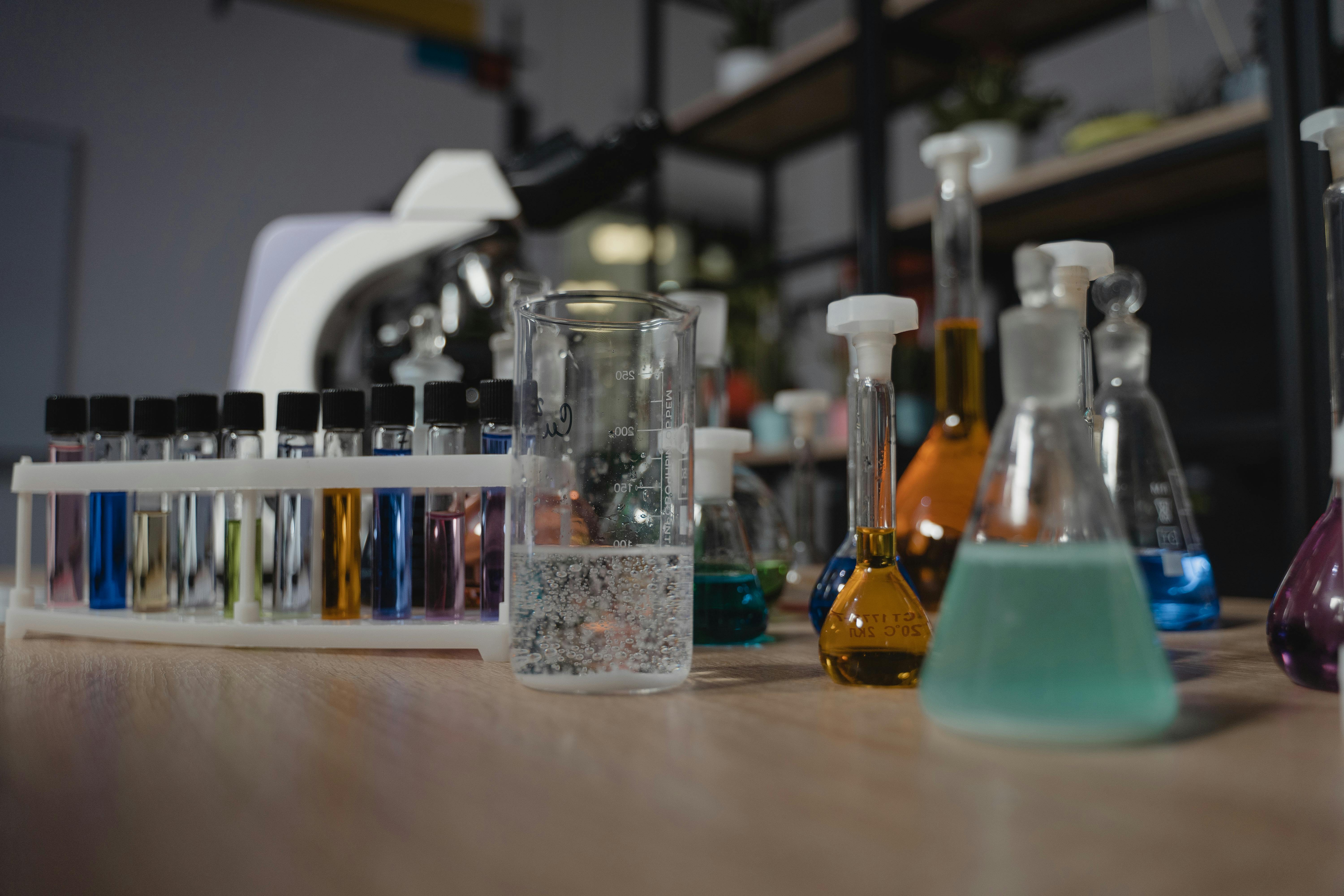
In chemical manufacturing, Daily Chemicals are not a single material category. They often include surfactants, preservatives, solvents, Dyestuffs And Pigments, Additives, Pharmaceutical Raw Materials, and Flavors And Fragrances used in cleaning products, personal care, household formulations, and specialty process blends. For a production line, selection starts with fit-for-process, not only price or availability.
Researchers usually focus on formulation behavior, compatibility, and performance windows. Operators care more about handling safety, batch stability, dosing consistency, and cleaning frequency. Procurement teams compare lead time, specification stability, and substitution risk. Decision-makers look at compliance exposure, total cost, and supply continuity over 6–12 month planning cycles.
A practical review normally begins with 4 core checks: chemical identity, purity range, process compatibility, and regulatory fit. If one of these is unclear, the material may still work in lab screening, but it can create scale-up losses, higher rejection rates, or repeated line adjustments during commercial production.
The first questions buyers and technical teams should ask
- Does the material match the target formulation system, such as aqueous, solvent-based, emulsified, or powder blending processes?
- Is the specification narrow enough to support repeatable batches, for example viscosity, moisture, color strength, pH, or assay range?
- Can the plant handle the storage and transfer conditions, such as 10°C–25°C storage, light protection, sealed drums, or humidity control?
- Will the supplier support technical documentation, sample verification, and change notification when raw material origin or process changes?
For most production lines, material qualification is more reliable when done in 3 stages: document review, pilot trial, and initial batch validation. This reduces the risk of selecting a Daily Chemicals input that passes basic testing but fails under continuous operation, high-shear mixing, long holding time, or multi-component blending.
Which technical parameters matter most in real production scenarios?
Selection becomes easier when teams translate product claims into measurable process indicators. In chemical plants, the most useful parameters are usually purity, active content, pH, viscosity, particle size, solubility, odor profile, moisture, and stability under thermal or mechanical stress. The exact priority depends on whether the line produces liquids, creams, gels, powders, tablets, or composite chemical blends.
For Dyestuffs And Pigments, dispersion behavior, color consistency, and sedimentation control matter more than a broad marketing description. For Additives, dosage window and interaction with base chemistry are often decisive. For Pharmaceutical Raw Materials, assay, impurity profile, and handling control are central. For Flavors And Fragrances, volatility, compatibility, and storage sensitivity can directly affect product stability and packaging performance.
Operators should also confirm how a material behaves across a typical process range. A raw material that performs well at 20°C may react differently at 35°C or under 30–60 minutes of mixing. In scaled production, small changes in foaming, wetting, or flow can increase cleaning downtime and make dosing less predictable.
Typical evaluation points for Daily Chemicals selection
The table below helps teams compare common material categories by technical focus, process concern, and selection priority. It is especially useful when multiple departments need one shared review standard for Daily Chemicals sourcing and production line qualification.
This comparison shows why technical selection cannot rely on one universal standard. A purchasing shortcut may save cost in the first order, but if the line requires tighter viscosity control, lower moisture, or better dispersion, the downstream cost can appear in rework, scrap, or repeated production holds within the first 2–4 weeks.
Why pilot-scale checks often reveal hidden issues
Pilot validation should simulate the real process as closely as possible. Useful checks include mixing time, dosing order, foam behavior, filtration performance, and packaging compatibility. In many chemical lines, a 20–200 kg pilot batch is enough to identify whether a Daily Chemicals input remains stable after heating, cooling, or transfer between tanks.
This stage also supports procurement decisions. If two materials meet the same lab target but one requires narrower storage control or longer dissolving time, its operating cost may be higher than its quoted unit price suggests. That is why technical and purchasing reviews should run together, not in separate steps.
What should procurement compare beyond unit price?
For procurement teams, the right Daily Chemicals choice depends on total acquisition value, not only ex-works cost. A lower-priced material may have a shorter shelf life, higher minimum order quantity, or weaker batch consistency. In chemical operations, these gaps can increase warehouse pressure, create more frequent requalification, or force higher safety stock during 4–8 week replenishment cycles.
A disciplined sourcing comparison should include at least 5 checkpoints: specification stability, lead time, packaging suitability, regulatory documentation, and substitution feasibility. If one supplier cannot maintain consistent specification ranges across multiple batches, production teams may spend more time adjusting process conditions than they save on purchase price.
Decision-makers should also examine hidden operational costs. These include higher dosing losses, line cleaning frequency, rejected packaging due to odor or color drift, and extra testing when material history is unclear. In sectors linked to household chemicals or regulated formulations, incomplete documentation can delay product release even when the material itself seems usable.
Procurement comparison framework for Daily Chemicals
The following table turns procurement review into a practical selection tool. It helps buyers compare Daily Chemicals offers from multiple sources while keeping technical, commercial, and compliance factors visible in one place.
A supplier that supports these checkpoints usually shortens the approval path between R&D, quality, production, and procurement. In practical terms, this can reduce repeated vendor clarification rounds and make quotation discussions more meaningful because all parties are comparing the same technical and supply basis.
Useful sourcing checklist before final approval
- Confirm whether the offered grade is industrial, cosmetic, food-related, or pharma-related as applicable to the intended use.
- Ask for recent batch documents and compare 3 consecutive lots if possible.
- Verify storage conditions, shelf life window, and recommended retest or review cycle.
- Check whether an equivalent or backup source can be qualified without reformulation.
- Align sample approval with commercial supply to avoid trial material that differs from actual shipment.
These steps are simple, but they can prevent one of the most common purchasing mistakes in Daily Chemicals sourcing: approving a material on commercial promise while under-checking its practical behavior on the production line.
How do compliance, storage, and risk control affect material selection?
In chemical operations, compliance is not limited to final product claims. It starts with raw material identity, safe handling, traceability, and fit for intended application. Depending on the material category and market, teams may need to review SDS, labeling requirements, transport classification, allergen or restricted substance statements, and product-specific declarations before releasing Daily Chemicals into routine use.
Storage is equally important. Some materials remain stable under ambient conditions, while others need protection from heat, moisture, oxidation, or direct light. A line may process the right material incorrectly simply because warehouse rotation, container resealing, or transfer exposure is not controlled. Even a 1–2 week delay in consumption can matter for sensitive Flavors And Fragrances or moisture-reactive additives.
For operators, risk control should be turned into routine actions rather than broad policy statements. This means verifying labeling at receipt, checking packaging integrity, following first-in-first-out rules, and monitoring critical storage conditions such as 15°C–30°C ambient control where required by the material profile. These are not administrative tasks; they directly support batch reproducibility.
Common compliance and handling risks
- Using a technically similar grade without confirming whether its documentation fits the target market or formulation category.
- Assuming one COA is enough while ignoring shipment-to-shipment variation or missing update notices.
- Overlooking packaging compatibility, especially when volatile, colored, or moisture-sensitive materials are transferred to secondary containers.
- Treating warehouse and production records separately, which weakens traceability during deviations or customer inquiries.
A practical 4-step control model
A workable model for Daily Chemicals management has 4 steps: incoming verification, controlled storage, production release check, and change review. Incoming verification confirms identity and documents. Controlled storage preserves specification. Production release links the material to the right batch order. Change review captures origin, process, or packaging changes before they affect commercial output.
This structure helps information researchers, buyers, and executives speak the same language. Instead of asking whether a supplier is simply “good,” the team can ask whether the material can pass a defined control path with acceptable risk, documentation completeness, and operating practicality.
What mistakes do companies make when choosing Daily Chemicals?
The most common mistake is selecting by nominal specification only. Two materials may share a similar assay or appearance, yet behave very differently in actual processing. One may disperse within 10 minutes, while another needs 25–40 minutes and still leaves residue. On a busy production line, that difference affects throughput, energy use, and cleaning schedule.
Another frequent problem is separating technical approval from purchasing approval. If R&D tests one sample, procurement buys another grade, and production receives a differently packaged lot, the organization creates avoidable risk. Daily Chemicals selection works best when sample, specification, packaging, and commercial supply are aligned before the first planned order.
Companies also underestimate substitution complexity. Replacing one additive, fragrance carrier, or pigment source may appear simple on paper, but the effects can spread across viscosity, shade, odor persistence, filling behavior, and shelf appearance. In many cases, even a “near equivalent” material still requires a short revalidation cycle.
FAQ for researchers, operators, buyers, and managers
How do I know whether a Daily Chemicals material is suitable for my line?
Start with 3 checks: formulation compatibility, process condition fit, and documentation completeness. Then run a controlled pilot under actual mixing, heating, and holding conditions. If the material remains stable through one pilot and one initial production batch, it is usually a stronger candidate than a material approved by datasheet alone.
What should procurement ask for before placing an order?
Ask for TDS, SDS, recent COA examples, packaging details, shelf life, storage guidance, and typical delivery cycle. Also confirm whether the commercial lot will match the sample grade. For repeat purchasing, request advance notice for any change in origin, process route, or packaging format.
Are cheaper alternatives always worth testing?
Not always. Lower-cost alternatives may still be useful, but they should be compared by total process impact. A cheaper material that increases dosing rate, causes more foam, or shortens shelf stability can raise overall operating cost. The right comparison unit is not only price per kilogram, but performance per qualified batch.
How long does qualification usually take?
For a standard industrial review, qualification may take 7–15 days if documents and samples are complete. If the material is used in more sensitive formulations or requires cross-functional review, the process may extend to 2–4 weeks. Clear specifications and responsive technical support usually shorten this timeline.
Why choose a supplier that supports both selection and implementation?
Choosing Daily Chemicals is easier when the supplier can support more than quotation. Buyers and technical teams often need help with parameter confirmation, material matching, packaging options, sample planning, and delivery coordination. A supplier that understands chemical production realities can reduce the gap between lab approval and line performance.
For information researchers, this means clearer data for early comparison. For operators, it means fewer surprises in handling and dosing. For procurement, it means better control of lead time and replacement risk. For business decision-makers, it means a more reliable path from product concept to stable commercial output across monthly or quarterly demand cycles.
If you are reviewing Dyestuffs And Pigments, Additives, Pharmaceutical Raw Materials, Flavors And Fragrances, or other Daily Chemicals for a production line, it is worth discussing the application in context. Material selection should reflect your formulation type, target market, compliance scope, packaging method, and production rhythm rather than a generic product list.
What you can contact us about
- Parameter confirmation, including purity range, active content, pH, viscosity, and storage conditions relevant to your process.
- Product selection for specific applications, such as cleaning products, personal care formulas, pigment systems, or additive-based process optimization.
- Sample support and pilot planning, including recommended test sequence and key validation points for 3-stage qualification.
- Delivery cycle discussion, packaging choice, and supply planning for regular orders or urgent projects.
- Documentation and compliance review, such as SDS, COA, technical data, and market-oriented material screening.
- Quotation and alternative solution comparison when cost control, substitution, or dual sourcing is part of your purchasing strategy.
If your team is comparing multiple Daily Chemicals options, send the target application, key technical requirements, expected order volume, and timeline. That makes it possible to discuss suitable grades, qualification steps, documentation readiness, and realistic supply arrangements with much greater accuracy.